Rust, anti-raid sky settlement — how Willjum builds a base raiders can't reach
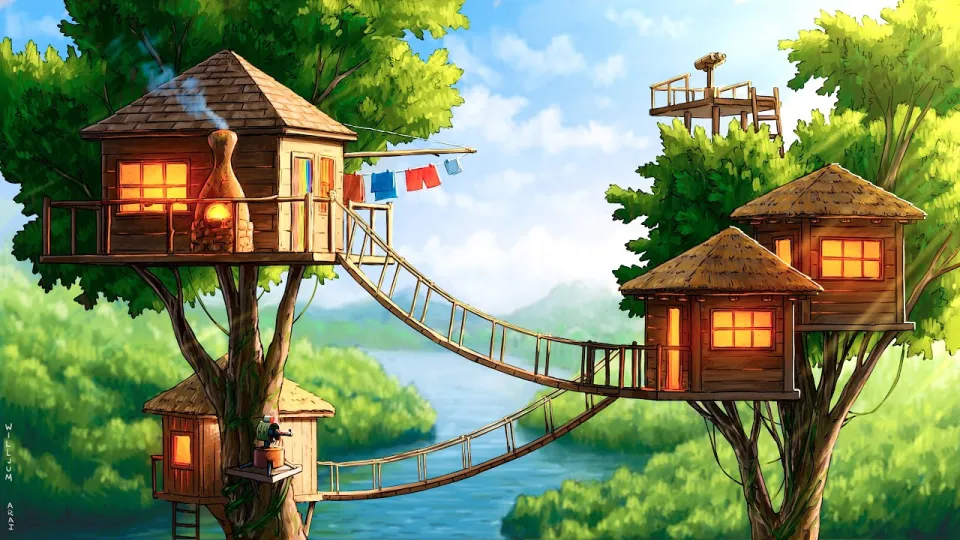
Video: I Built an anti raid sky settlement in Rust...
Want articles like this for your own video to promote it on YouTube and Google? Order them through the Telegram bot @sat_sit_bot. It writes articles around your video, embeds the video and publishes them on popular niche websites (no ads). Try it free: 50 articles on us.
· based on the channel Willjum
An anti-raid sky settlement in Rust is a base built high off the ground — on a cliff, a tower or a stack of foundations — so that raiders must spend extra sulfur, ladders and time before they can even touch the loot room. Willjum's video "I Built an anti raid sky settlement in Rust..." takes that idea and turns it into a full solo wipe story, and the build logic behind it is worth understanding even if you never copy the exact layout. Support for the channel, including behind-the-scenes material and early access, is available through Willjum's Patreon page.
What an anti-raid sky settlement actually is in Rust
A sky settlement is a base whose loot is separated from the ground by vertical distance rather than by walls alone. In Rust, raiders plan around sulfur cost: one C4 requires 2200 sulfur to craft, one rocket costs 1400 sulfur in materials, and a satchel is cheap but slow and loud. When your loot sits 15–20 meters above the terrain, the raider's first problem is not the wall — it is getting a stable platform to stand on while placing charges, and doing it without being visible from the whole grid.
That is why the concept works better than plain honeycomb against small groups. A traditional 2x2 with layers of walls forces the attacker to spend more explosives; a sky base forces them to spend explosives and expose themselves. On a solo or duo server, where most raids are opportunistic, that extra friction is often enough to send a raider looking for an easier target.
Why height beats honeycomb against small raid groups
Height converts a raid into a construction project, and most Rust players raid for quick profit, not for a two-hour engineering session. The practical effects stack up:
- Ladder placement. Raiders must build up to your base, and every ladder or twig foundation is a structure you can shoot, break or trap.
- Charge placement. C4 and rockets need a flat surface and a line of sight; angled cliff faces and overhanging floors make placement awkward and slow.
- Counter-raid window. The longer a raid takes, the more likely neighbors hear explosions and arrive — the single biggest deterrent on a populated server.
- Loot denial. If the attacker does break in, a sky base usually has one narrow entrance, which turns the fight into a chokepoint instead of a free-for-all.
The trade-off is real: a sky base is harder to defend from the roof and much harder to evacuate from when things go wrong.
The costs a sky base pushes onto the raider
Every meter of height has a sulfur price, and it is easier to plan a defense when you know the numbers. A raider who wants to reach a sky base typically needs:
- Twig or ladder access — cheap for them, but noisy and visible, which is exactly what you want.
- Explosives for the entry point — a single sheet metal door takes 2 C4 or 8 rockets, and a garage door takes 3 C4 or 9 rockets.
- A fallback plan — if the tower collapses or the raider is pushed off, they lose everything they carried up.
Against a stone or metal sky base with a single approach, a small group often burns more sulfur on access than on the loot room itself. That is the entire economic argument for building upward.
Where a sky settlement fails
A sky base is not invincible, and pretending otherwise gets your loot boxed. The main failure points are predictable:
- No ground presence. If everything you own is in the sky, you have no safe place to respawn, craft or store backup kits after a death.
- Predictable routes. Raiders learn your ladder path and camp it; a single well-placed rocket can drop your only way up.
- Fall damage and roof exposure. Fighting on a high roof means one bad step ends the defense, and raiders with bolties love a silhouette against the sky.
- Poor scaling. Sky bases are strongest for solos and duos; large clans simply bring more rockets and more players to hold the ground below.
The usual fix is a hybrid: a small, cheap ground bunker for respawns and starter loot, with the real stash elevated above it.
Common questions from viewers of the build
A large part of Willjum's audience has never launched Rust, and their questions are practical rather than technical. The recurring ones are worth answering directly.
- Do you need to be good at PvP to run a base like this? No — the design is meant to reduce the number of fights you take, not win more of them.
- Does it work on high-population servers? It works best where raids are opportunistic; on a maxed-out server with organized clans, expect the sky base to be scouted and hit with a full raid budget.
- How long does it take to build? A basic elevated shell with a single entrance can go up in a few hours of farming, but the supporting ground bunker and upkeep come first.
- Is it boring? It is quieter than a roadside base, which is exactly the appeal for players who want to farm, build and log off without losing everything overnight.
Useful links
- Willjum on Patreon — channel support and bonus content.
- https://www.twitch.tv/willjum — live streams, including the survival island server.
- https://twitter.com/willjum1 — updates and announcements.
- http://creativecommons.org/licenses/by/4.0/ — license for the Creative Commons music used in the video.
Bottom line
An anti-raid sky settlement in Rust is a bet that friction beats firepower: you make the raider climb, expose themselves and spend sulfur before the loot room is even in sight. It suits solo and duo players on servers where raids are improvised rather than organized, and it pairs badly with clans who can simply outspend the height. The build in Willjum's video is a good demonstration of the trade-off between safety and logistics, and the channel's weekly solo survival format makes the reasoning behind each decision easy to follow. If you want to support that kind of long-form storytelling, the Patreon page is the place to start.
Key takeaways
- Willjum's video "I Built an anti raid sky settlement in Rust..." published on 10 October 2026 and doubles as a 2 million subscriber milestone episode.
- The core idea is verticality: a base placed so high that ground raiders need extra resources, ladders and patience before the first wall even matters.
- Rust raiding is priced in sulfur: a single C4 costs 2200 sulfur worth of materials, so every extra wall or climb multiplies a raider's bill.
- Sky bases trade defense for logistics — every trip up means stairs, ladders or a lift, and falling off a roof kills you just as fast as a rocket.
- Willjum streams and uploads solo survival content weekly, with server links and Patreon support listed in the video description.
Source: I Built an anti raid sky settlement in Rust... · Markdown version
Questions & answers
Is a sky base in Rust actually raid-proof?
No base in Rust is raid-proof, and a sky settlement is no exception. Height raises the sulfur cost and exposure of a raid, which deters small opportunistic groups, but an organized clan with enough rockets will still get in. Treat it as a deterrent, not a guarantee.
How much sulfur does it take to raid an elevated base?
It depends on the entry path, but the baseline is high: one C4 costs 2200 sulfur in materials and one rocket about 1400, and a sheet metal door alone takes 2 C4 or 8 rockets. Add the cost of building up to the base and the total climbs well past what most solo raiders carry.
Can a solo player maintain a sky base?
Yes, but upkeep and logistics are the real burden. Every trip means stairs or a lift, and losing the only route up can strand your loot, so most solos keep a small ground bunker for respawns and backup kits underneath the elevated stash.
Why do people who never played Rust watch these builds?
The appeal is the story rather than the mechanics: a wipe narrated from first farm to final defense reads like a short film. Viewers pick up base-building logic along the way, which is why the format attracts a large non-playing audience.